dimarts, 16 d’abril del 2019

Johnson & Johnson shares rise on Street-beating Q1, lifted guidance

Johnson & Johnson

Shares in Johnson & Johnson (NYSE:JNJ) have risen today after the medical giant posted first quarter earnings that topped expectations on Wall Street and lifted its EPS guidance for the full fiscal year.

The New Brunswick, N.J.-based company posted profits of approximately $3.75 billion, or $1.39 per share, on sales of $20 billion for the three months ended March 31, seeing the bottom line shrink 14.2% while sales grew 0.1% compared with the same period during the previous year.

Adjusted to exclude one-time items, earnings per share were $2.10, ahead of the $2.04 consensus on Wall Street where analysts expected to see sales of $19.6 billion, which the company also topped.

“Our strong first-quarter results reflect continued underlying operational sales and adjusted EPS growth. At the same time, we remain focused on investing in innovative technologies and platforms that will make a meaningful difference in the lives of patients around the world. I am proud of our global colleagues’ collective efforts to deliver on our long-term goals and our ability to create value for all of our stakeholders,” chair & CEO Alex Gorsky said in a press release.

Johnson & Johnson lifted its guidance for the remaining fiscal year, now expecting to see adjusted diluted EPS of between $8.53 and $8.63 up from previous guidance of between $8.50 and $8.65. The company maintains its sales expectation of between $80.4 billion and $81.2 billion.

Shares in Johnson & Johnson have risen 2.6% so far today, at $140.08 as of 9:47 a.m. EDT.

Earlier this month, Johnson & Johnson said that its  its Ethicon biz completed its $3.4 billion acquisition of robotic surgery dev Auris Health and the $2.8 billion divestiture of its Advanced Sterilization Products to Fortive (NTSE:FTV).


from MassDevice http://bit.ly/2XhKmSy

Egypt fast-track medical device registration pathway speeds up market access timeframes

Emergo GroupBy Stewart Eisenhart, Emergo Group

A fast-track premarket review pathway for some medical devices in Egypt is yielding substantially reduced time to market for qualifying manufacturers.

Get the full story here at the Emergo Group’s blog.

The opinions expressed in this blog post are the author’s only and do not necessarily reflect those of MassDevice.com or its employees.


from MassDevice http://bit.ly/2DrDqLt

dilluns, 15 d’abril del 2019

Glaukos touts 5-year study of glaucoma stents

Glaukos  (NYSE:GKOS) said today that a study of its iStent trabecular micro-bypass stents reduced eye pressure in glaucoma patients five years after implant. The same study showed that significantly fewer iStent patients needed add-on medications after five years, the company said.

The study showed that newly diagnosed, primary open-angle glaucoma (POAG) patients who received two iStents achieved a 35.3% reduction in mean intraocular pressure (IOP) to 16.5 mmHg. The prospective, controlled, multi-surgeon clinical trial pitted evaluated the five-year safety and efficacy of two iStents vs. topical prostaglandin as an initial intervention in POAG subjects who had not had prior glaucoma treatment. A total of 101 subjects were randomized in a 1:1 ratio to receive either two iStents in a standalone procedure or once-daily topical travoprost, a commonly prescribed prostaglandin. The results were published in Ophthalmology Glaucoma.

Treatment success — defined as mean diurnal IOP of 6 mmHg to 18 mmHg without add-on medication or secondary glaucoma surgery — was achieved in 77% of stent eyes vs. 53% of travoprost eyes (p = 0.04). Seventeen percent of stent eyes vs. 44% of travoprost eyes required add-on medication.

The need for add-on medication arose at a slower rate in the stent group than in the travoprost group, especially after two years of follow-up. Study authors observed that from two to five years of follow-up, add-on medications were initiated in roughly double the number of travoprost eyes vs. stent eyes. The safety profile was excellent in both groups throughout follow-up, according to the San Clemente, Calif.-based company.

“Topical ocular hypotensive medications are typical first-line glaucoma therapy but these drugs can be ineffective due to high rates of patient non-adherence, ocular surface damage, cost and other factors,” said ophthalmic surgeon and lead author Dr. Robert Fechtner in a prepared statement from Glaukos. “This study shows that not only are Glaukos’ iStents as effective as once-daily topical travoprost in controlling IOP, but they also succeed at maintaining IOP reductions over the long-term with fewer additional medications.”

Three-year outcomes of this study were published in 2016 in Ophthalmology and Therapy. The most recent article detailing five-year outcomes may be accessed online here.

“This latest publication represents the first-ever five-year, protocol-driven, randomized evaluation of standalone iStent implantation in newly diagnosed glaucoma patients,” said Glaukos prez & CEO Thomas Burns. “Moreover, it adds meaningful outcomes data to the growing body of peer-reviewed evidence that implantation of a single or multiple iStents can reliably achieve sustained IOP reductions in an elegant, tissue-sparing procedure with a highly favorable safety profile.”

Today’s announcement was good news for Glaukos, whose iStent recently fared worse in a two-year study that compared it to competitor Ivantis’ Hydrus Microstent. The Ivantis study touted reductions in medication use and no reoperations for patients in the Hydrus arm.


from MassDevice http://bit.ly/2Pf9ruD

More device shortages pegged to sterilization plant shutdown

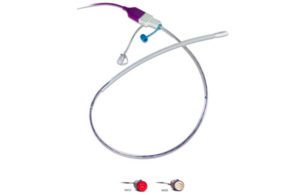
Cardinal Health’s Accu-Trace intrauterine pressure catheter (Image from Cardinal Health)

More medtech companies are experiencing shortages of medical devices due to the sudden closure in February of a Sterigenics sterilization plant.

Officials from Cardinal Health (NYSE:CAH), and Guerbet (EPA:GBT) have written letters to customers indicating that certain devices are already in short supply or may experience shortages, Medical Device & Outsourcing has learned.

The letter from Cardinal Health (Dublin, Ohio) said that the company expects a shortage of its Kendall Accu-Trace intrauterine pressure catheter until early August. This device is placed inside a pregnant woman’s uterus to monitor uterine contractions during labor. The letter from Guerbet (Villepinte, France) said that disposable power injectors used with its Optistar, Optivantage and Illumena contrast delivery systems may experience shortages. Officials from those companies did not immediately respond to requests for comment.

Get the full story on our sister site, Medical Design & Outsourcing.


from MassDevice http://bit.ly/2v58oUX

Penumbra VR device wins FDA clearance

penumbra-logoPenumbra recently announced that it has received FDA 510(k) clearance for its Real Immersive virtual reality system.

The Real Immersive System is an immersive virtual reality and display system that tracks upper extremity rehabilitation exercises for adults who have symptoms related to acute pain, cerebral palsy, stroke, orthopedic or neurodegenerative diseases. The exercise routines with the Real Immersive System are designed to be done in a seated position in a clinical environment, according to Penumbra.

The system features a clinician tablet, head-mounted display component, small sensors, large sensor, sensor charger, router, router battery, HMD controller, power cords and USB cables. The small and large sensors have mechanical and electrical components that can measure motion and direction in the physical space and then translate that information into a virtual environment.


from MassDevice http://bit.ly/2UiVDQX

Corindus touts first Japanese CorPath GRX procedures

Corindus Vascular RoboticsCorindus Vascular Robotics (NYSE:CVRS) said today that the first Japanese procedures using its CorPath GRX robot-assisted device took place as part of a post-market surveillance study.

Waltham, Mass.-based Corindus, which last June won clearance from Japan’s Pharmaceutical & Medical Device Agency for CorPath GRX, inked a distribution deal for Japan in February 2017 that included a $2 million advance and provision for 12 of the devices; the system used in the initial cases there was the first placement of that deal and followed A1 technical fee reimbursement approval last month, Corindus said today.

CorPath GRX is used to assist cardiologists during percutaneous coronary interventions including stenting procedures.

“The acceptance of robotic-assisted PCI in Japan is an important next step for Corindus to bring this critical medical advancement to additional markets across the globe. Japan represents one of the largest markets for PCI globally, with over 1,200 hospitals performing nearly 250,000 PCI procedures annually,” president & CEO Mark Toland said in prepared remarks.

“After completing the first cases with CorPath GRX, I am impressed with the capabilities of the system, including the level of precision and control during complex procedures,” added Dr. Takafumi Ueno of Kurume University Hospital. “Robotics will provide Japan with cutting-edge technology in interventional medicine, and we are pleased to be one of the first facilities in the Asia-Pacific region to offer this treatment to our patients.”

“We are thrilled to have partnered with Dr. Ueno, Kurume University Hospital, and Japan Medicalnext to launch the first vascular robotic program in Japan, offering these patients the benefits of robotic-assisted PCI,” Toland said.


from MassDevice http://bit.ly/2ZaXcUy

FDA approves Intact Vascular’s Tack dissection repair device

Intact VascularThe FDA last week granted pre-market approval to the Tack endovascular repair device developed by Intact Vascular.

The Wayne, Pa.-based company’s Tack system is designed to repair dissection complications during balloon angioplasty for peripheral artery disease. Intact said the federal safety watchdog based the April 11 PMA decision on the results of a pivotal, 213-patient single-arm trial that met both its safety and efficacy endpoints. The Tack device won CE Mark approval in the European Union in January 2017.

The Toba II study‘s rate of freedom from clinically-driven target lesion revascularization, amputation or all-cause death, its primary safety endpoint, was 86.5%. The trial met its efficacy endpoint with a 79.3% primary patency rate at 12 months. And 92.1% of all dissections were completely resolved, according to results presented at last year’s Vascular InterVentional Advances conference in Las Vegas by principal investigator Dr. William Gray.

Intact Vascular said the trial, which it touted as the first to enroll PAD patients with 100% dissected vessels, also showed 0.5% bailout stent rate and zero implant fractures.

“FDA approval of the Tack endovascular system comes at a dynamic time in the PAD market place. The Tack system’s unique combination of minimal metal and highly targeted dissection repair is an ideal fit with today’s focus on minimizing inflammation and improving long term outcomes,” president & CEO Bruce Shook said in prepared remarks. “Now with the Tack endovascular system available in both Europe and the United States, we look forward to expanding our commercialization efforts and continuing to improve the quality of life for PAD patients.”

“I look forward to having the Tack implant available for my patients,” added Gray, of Wynnewood, Pa.’s Lankenau Heart Institute. “Post-angioplasty dissections can significantly impact patient outcomes. Having a minimal metal solution that specifically addresses dissections and improves angioplasty results while preserving future treatment options is extremely exciting.”

Intact said it’s planning a limited U.S. release “that will progress toward broader market commercialization.” The company raised a $20 million Series C round in April 2018.


from MassDevice http://bit.ly/2XkdnNL

FDA clears Gelesis weight-loss hydrogel pill Plenity


plenity-gelesis

[Image from Gelesis]

Gelesis (Boston) recently announced that it has received FDA clearance for its Plenity weight management prescription drug.


The drug is a weight management aid for adults who have a body mass index of 25-40 kg/m2 and is supposed to be used with diet and exercise. It can be used in people with and without comorbidities like hypertension, type 2 diabetes or dyslipidemia. The company says that there is no restriction on how long the drug can be used in weight management.

“This FDA clearance is a major milestone for the Gelesis team and our technology, and we are thrilled to be able to bring this new prescription product to the millions of people looking for a safe, validated and convenient treatment option to manage their weight without surgery or stimulants,” Yishai Zohar, founder and CEO of Gelesis, said in a press release. “With Plenity, Gelesis is introducing a completely new approach with a unique mechanism of action to aid in weight management, with efficacy and safety supported by positive data from large clinical studies.”

Plenity is taken in the form of capsules with water before lunch and dinner. It is made by cross-linking cellulose and citric acid to make a 3D hydrogel matrix. When taken, the capsules release thousands of non-aggregating particles that rapidly absorb water in the stomach to create small gel pieces that have the elasticity of plant-based foods with no calories. The gel pieces help by increasing the volume and elasticity of the stomach and small intestine, helping the body feel more full to induce weight loss.

“More than 150 million Americans struggle with excess or unhealthy weight. Unfortunately, the majority of individuals with weight issues have important weight-related medical problems. There is no doubt that making a significant impact on this issue should be America’s number one public health priority,” said Dr. Ken Fujioka, a weight loss expert and endocrinology researcher at Scripps Clinic and scientific advisor to Genesis. “The scientific data supporting PLENITY’s positive effects on weight make it a powerful tool to help with weight management. The most compelling aspects of this approach are its effectiveness, novel mechanism of action and impressive safety data. This approach creates another arm in the treatment algorithm of weight management and could be used by an overwhelming majority of people struggling with weight issues.”

The drug, which is a non-stimulant and non-systemic treatment for obesity, has been shown in clinical studies as being effective, safe and well-tolerated. The studies showed that Plenity had a combination of effectiveness and highly favorable safety and tolerability profile.

“Given the complexity of the disease of obesity and the need for expanded treatment options, the Obesity Action Coalition is encouraged to see continued innovation in safe and effective chronic weight management options. We welcome Plenity’s addition as a treatment option for people affected by obesity,” Joe Nadglowski, president and CEO of the Obesity Action Coalition.


from MassDevice http://bit.ly/2P8ded6

U.K. government requests Brexit deadline extension

Emergo GroupBy Ronald Boumans, Emergo Group

The U.K. government has requested a further delay in implementing its withdrawal from the European Union, with an April 12 deadline for a no-deal Brexit outcome fast approaching.

Get the full story here at the Emergo Group’s blog.

The opinions expressed in this blog post are the author’s only and do not necessarily reflect those of MassDevice.com or its employees.


from MassDevice http://bit.ly/2IlBbNs

divendres, 12 d’abril del 2019

EO plant shutdown leads to pediatric breathing tube shortage

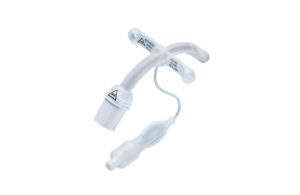
Smiths Medical Bivona tracheostomy tubes are in short supply, according to the FDA. (Image from Smiths Medical)

The February shutdown of an ethylene oxide (EO) sterilization plant has produced the first temporary medical device shortage, according to the FDA.

The device in short supply is the Bivona tracheostomy tube manufactured by Smiths Medical and used by many pediatric patients. The FDA anticipates the tube will be made available again the week of April 22, according to a statement from Dr. Jeffrey Shuren, director of the agency’s Center for Devices and Radiological Health (CDRH). The state of Illinois ordered the shutdown of the Sterigenics plant in Willowbrook, Ill. due to emissions of EO, a highly carcinogenic chemical compound.

Get the full story on our sister site, Medical Design & Outsourcing.


from MassDevice http://bit.ly/2UzbkYX

NuVasive launches X360 lateral single-position surgery device

NuVasive Inc. (NSDQ:NUVA) said yesterday that it launched its X360 system intended for lateral single-position surgery in the U.S.

The newly launched X360 system features improvements intended to accommodate advanced techniques and technologies for enhanced operating room workflow and efficiency, the San Diego-based company said.

The system also features integration with NuVasive’s Pulse surgical automation platform to allow surgeons to perform multiple procedures from the lateral position.

“X360 has transformed my approach to treating patients, allowing me to customize my surgical workflow, reduce patient anesthesia time, and efficiently treat the patient in a single, lateral position. Integrating planning, imaging, navigation, and automation throughout this entire surgical approach has become an integral component to the clinical outcomes of my patients,” Dr. Anand Veeravagu of Stanford University Medical Center said in a prepared statement.

NuVasive touted that because the system allows surgery to be performed without repositioning, it can reduce operating times by up to 60 minutes, saving hospitals on average of approximately $5,000 per patient.

“The X360 system is the most comprehensive approach to lateral single-position surgery available on the market. NuVasive continues to extend its global leadership position in lateral surgery with the integration of X360 and Pulse, the only surgical automation platform designed for spine surgery. By incorporating Pulse and, in the future, robotic automation, with X360, we are enhancing the overall OR workflow and helping surgeons deliver greater clinical predictability and reproducible outcomes for their patients,” NuVasive prez Matt Link said in a press release.

In February, NuVasive said that it won FDA 510(k) clearance and CE Mark clearance in the European Union for its Precice bone transport system.


from MassDevice http://bit.ly/2IzVHtn

Stryker wins FDA PMA, launches Lifepak CR2 AED

Stryker

Stryker (NYSE:SYK) said yesterday that it launched its Lifepak CR2 defibrillator featuring the LifelinkCentral AED program manager after winning FDA premarket approval for the system.

The newly launched Lifepak CR2 AED features new technology including CPRInsight, which allows users to continue chest compressions during ECG analysis and can improve survival outcomes, the Kalamazoo, Mich.-based company said.

The Lifepak CR2 AED also features a child mode button to reduce defibrillation energy for pediatric patients and an optional bilingual feature.

The system can be connected to the LifelinkCentral AED program manager to allow an organizations AED manager to remotely monitor and manage the device to improve readiness, Stryker said.

“In order to save more lives from sudden cardiac arrest, we must save time. The Lifepak CR2 is designed to help rescuers provide higher quality CPR and to provide the fastest first shock when defibrillation is needed. Everything about it is designed to increase user confidence. The Lifepak CR2 harnesses the benefits of connectivity to provide a foundation for better care throughout the entire chain of survival and to simplify AED program management for our customers,” Stryker emergency care public access GM Ryan Landon said in a press release.

The Lifepak CR2 was previously released in Europe and Canada in 2017 and in Japan in 2018, Stryker said.

In March, Stryker said that it put $220 million on the table for OrthoSpace and its InSpace rotator cuff repair device.


from MassDevice http://bit.ly/2v2FQeE

TissueTech raises $55m

TissueTech

TissueTech has raised approximately $55.3 million in a new round of equity financing, according to a recently posed SEC filing.

The Doral, Fla.-based company makes amniotic membrane- and umbilical cord-based products designed to treat ocular surface diseases (its Bio-Tissue subsidiary) and musculoskeletal conditions and wound care (its Amniox Medical business).

Money in the round came from three unnamed investors, with the first sale dated as having occurred on April 9, according to the filing.

The company is looking to raise an additional $27 million, which would bring the total raised up to approximately $82.3 million, according to the SEC filing.

TissueTech said that it plans to use a $10 million of the proceeds to repurchase from common stockholders on a pro rata basis, according to the SEC filing.

The company has not yet announced any other plans for the funds.


from MassDevice http://bit.ly/2IB7kQP

FDA clears moldable OssiMend bioactive bone graft from Collagen Matrix

Collagen Matrix

Collagen Matrix said today that it won FDA 510(k) clearance for its line of OssiMend Bioactive Moldable bone graft matrix products, intended for use in spinal procedures.

The Oakland, N.J.-based company said that the newly cleared OssiMend product is composed of anorganic carbonate apatite bone mineral, 45S5 bioactive glass and highly purified Type I collagen, and that it can be molded into putty for filling irregular defect sites.

The moldable Ossimend product is designed to be slowly resorbed and replaced by new bone tissue, and comes in various sizes, Collagen Matrix said.

“We continue to expand our product portfolio for the Spine market with the development of this unique line of Bioactive bone graft matrices that combines a carefully-selected ratio of three powerful components. This innovative moldable version offers surgeons options for better ensuring predictable outcomes,” CEO Bart Doedens said in a press release.


from MassDevice http://bit.ly/2P5udNj

Philips to private-label Demant hearing aids

Demant, Philips

William Demant (CPH:WDH) said this week that it inked a deal to market its line of hearing aid devices under Royal Philips (NYSE:PHG) brand.

Denmark-based Demant said that Amsterdam-based Philips will offer a complete range of hearing aids, accessories and applications under the Philips HearLink brand

“Based on a shared vision of improving the lives of people through innovative healthcare this new cooperation will not only change the way we see hearing healthcare, but also widen the definition of hearing healthcare, supporting healthier lifestyles and active aging. Combining Demant’s world-leading hearing aid technology with Philips’ global brand presence in healthcare, the cooperation will enrich the hearing healthcare experience,” Philips brand licensing senior director Spencer Ramsey said in a prepared statement.

The companies said that the HearLink devices can be connected to other devices, including smartphones and televisions, and that the products are available now.

“The Philips hearing aids will provide users with an innovative, future-proof hearing solution. We live in an age where user engagement and digital services are shaping the future of healthcare technology. More and more people are conscious of taking control of their own personal healthcare and are using electronic devices to do so. In this light, Philips hearing solutions offers new and exciting premium solutions alongside Philips’ healthcare ecosytem, which will attract interest and generate significant benefits to users, ultimately supporting our valued customer base of hearing care professionals. With this partnership, we take connected hearing healthcare to the next level and offer new and exciting solutions within integrated healthcare services to the benefit of both professionals and people suffering from a hearing loss. Health, caring and innovation are cornerstones in the vision of both Demant and Philips, which makes the partnership a great match for the future. Furthermore, it will strengthen and add value to both companies’ ambition to improve people’s lives,” Demant prez & CEO Søren Nielsen said in a press release.

Earlier this month, Philips won a $450 million contract to supply the U.S. Department of Defense with patient monitoring systems, accessories and training.


from MassDevice http://bit.ly/2UyHOTb

Ajax Health raises $85m for medtech investment

Ajax Health

Ajax Health, the company formed in 2017 by a pair of private equity giants to manage their medical device investments, said today that it has raised more than $85 million to help fund operations and expansions of select medical device companies.

The round was led by HealthQuest Capital and joined by Aisling Capital and Polaris Partners, the Menlo Park, Calif.-based company said.

“Ajax Health approaches medical device innovation in a novel way, applying best-in-class strategies to pinpoint technologies with the greatest opportunity to take off, then rapidly developing them into a fully integrated business. Ajax Health’s proven executive team, led by Duke Rohlen, Doug Koo and Aftab Kherani, has shown an exceptional ability to develop medical technologies successfully and cost efficiently,” HealthQuest founder & managing partner Dr. Garheng Kong said in a prepared statement.

Ajax Health said that it will seek to invest in companies with disruptive medtech devices with its newly raised funds, focusing on businesses with a potential for high-exit demand where returns could be realized within 48 months.

“I am extremely grateful to our partners HealthQuest, Aisling and Polaris for backing Ajax II. These firms have been exceptional partners for a long time and I look forward to working with them again,” Ajax Health chair & CEO Duke Rohlen said in a press release.

In May 2017 KKR and Aisling Capital joined to launch Ajax, tapping Spirox chairman & CEO Rohlen to lead it. Rohlen is the former president of FoxHollow Technologies and the founder & former chief executive of CV Ingenuity.

Last July, Ajax said that it raised a Series B round of $120 million.


from MassDevice http://bit.ly/2uZjPO1

FDA: Duodenoscope reprocessing is dirtier than we thought

Superbug endoscopeThe FDA said today that new data show that the contamination rate for “high-concern organisms” in duodenoscopes is nearly twice as high as previously thought and warned the devices three major manufacturers to get their required post-market studies in gear.



Back in 2015 the federal safety watchdog warned Olympus (TYO:7733), Fujifilm Holdings (TSE:4901) and Hoya’s (TYO:7741) Pentax subsidiary following a string of deadly “superbug” infections attributed to their duodenoscopes. The FDA ordered the companies to run post-market surveillance studies to assess the effectiveness of reprocessing the scopes; last year it sent the trio another set of warning letters over their failure to comply with that order.

Today Dr. Jeffrey Shuren, director of the FDA’s Center for Devices & Radiological Health, warned of possible “additional action” if the companies don’t meet their deadlines.

“While the firms have made some progress toward completing these studies, they are still not in compliance with the timetable they agreed upon to complete these studies. If the companies continue to fail to adequately respond to our concerns, the FDA will take additional action,” Shuren said in prepared remarks.

Although the number of adverse event reports for the devices fell 62%, from 250 in 2015 to fewer than 100 in 2017, a spate of 205 reports from last October to the end of March included 45 patient infections, one patient exposure and 159 contaminated devices; there were three U.S. deaths reported last year from duodenoscope infections, according to the FDA.

And as of last December the FDA thought that the contamination rate for high-concern bugs like E. coli and Pseudomonas aeruginosa was 3%. New data show that number to be more like 5.4%, the agency said.

“Let me be clear, the percent of contaminated samples based on these interim results shows that improvements are necessary and we are committed to taking additional steps to reduce infections and contamination even further,” Shuren said, noting that the FDA is considering whether more stringent action is necessary to get infection rates under 1%.

“For example, we are exploring whether supplemental measures, such as sterilization, in addition to meticulous cleaning, might offer a more effective option. This will take careful consideration because we know some sterilization methods could damage the duodenoscope over time and lead to a shorter lifespan for the expensive device,” he said.

The FDA is also consulting the Centers for Disease Control & Prevention and other health agencies “to obtain their input and guidance on the issue of infection control and reprocessing of these difficult-to-clean scopes,” Shuren said.


from MassDevice http://bit.ly/2DbrJs2

Synaptive Medical raises $5m

Synaptive Medical

Synaptive Medical has raised approximately $5 million in a new round of debt and options financing, according to a recently posted SEC filing.

The Toronto-based company has not yet stated how it plans to spend funds raised in the round.

Synaptive Medical produces medical devices intended to facilitate surgical planning, navigation, robotic automation, digital microscopy and informatics through an interconnected platform, according to its website.

Money in the round came from a single unnamed investor, according to the filing, with the first date of sale noted as having occurred on March 26.

Last month, Synaptive Medical said that it named Sandra Clarke as its new finance chief.


from MassDevice http://bit.ly/2uZHg9M

Ex-MiMedx CEO Petit mounts proxy war

MiMedx

MiMedx (NSDQ:MDXG) is facing a proxy battle being led by former CEO Parker Petit, who was ousted last July “for cause”, according to a recently posted SEC filing.

The ex chief-exec nominated himself alongside former Pulte Home Corp tax director David Furstenburger and George & Lorenson partner Shawn George as candidates for the company’s board of directors, set to be elected at an upcoming shareholder’s meeting.

Petit said that he believes that the current MiMedx board has “failed shareholders with disappointing performance, failure to ensure competent leadership and lack of engagement with MiMedx shareholders.” He added that he “felt compelled to launch a contest seeking changes on the board,” according to the filing.

“In my opinion, the current board has done a major disservice to MiMedx’s shareholders and there is no sign the board has the ability, judgment or commitment to return MiMedx to its former growth and profitability as a NASDAQ listed company. Shareholders have been left in the dark while the company’s value has significantly dropped. I could no longer sit on the sidelines. Together with Shawn and David, we, if elected, will bring a wealth of experience working on and resolving expeditiously highly contentious and complicated matters. I believe that our slate of candidates will instill the much needed accountability and reason in the boardroom that MiMedx is now lacking, while supporting its valuable employees and expanding its best in class intellectual property patents,” Petit said, according to the SEC filing.

MiMedx faced a number of troubles last year, including the ouster of Petit and president & COO William Taylor amid a board-directed independent investigation that had already prompted the departure of CFO Michael Senken and treasurer John Cranston in June.

At the time, MiMedx said it would restate all of its earnings reports going back to 2012 and was cooperating with U.S. Securities & Exchange Commission and Justice Dept. investigations into the matter.

The company later said that all four executives’ departures were for cause, triggering the forfeit of all equity and incentive awards for the executives and Petit’s resignation from the board. Petit and Taylor denied the allegations in a statement from their lawyer.

In December, the accounting firm tapped to audit MiMedx’s books resigned in the wake of the financial issues the company faced.


from MassDevice http://bit.ly/2VHKElA

Pennsylvania appeals court upholds $14m plaintiff win in Ethicon mesh case

J&J's EthiconA state appeals court in Pennsylvania yesterday upheld the plaintiff’s $13.7 million win in a product liability lawsuit brought over one of Johnson & Johnson (NYSE:JNJ) subsidiary Ethicon‘s pelvic mesh products.

Plaintiff Sharon Carlino was awarded $13.5 million in damages in February 2016, after a Keystone State jury found that the Ethicon transvaginal polypropylene tape implanted during a 2005 hysterectomy was defective and that the company failed to adequately warn of its risks; Carlino needed three revision surgeries to remove the eroded mesh. That decision was upheld early the following year, with the court adding some $238,000 in delay damages.

Ethicon and Carlino cross-appealed, with the company pressing seven arguments seeking to overturn the decision and Carlino arguing that the delay damage award should have been calculated on both compensatory and punitive damages, not just the compensatory award.

Yesterday the Pennsylvania Superior Court ruled on the cross-appeals, backing the lower court’s decision on all fronts, including Ethicon’s challenge to the punitive damages award and the delay damages ruling.

“Taken as a whole, and viewed in the light most favorable to the verdict winner, this evidence permitted the jury to find Ethicon acted with wanton and willful disregard of Ms. Carlino’s rights and that this conduct caused her injuries. The evidence showed that Ethicon knew that the TVT could cause permanent vaginal and muscular pain and sexual dysfunction, because of its mesh weight, pore size, pore collapse, and particle loss. Despite this knowledge, Ethicon promoted the TVT for patients who sought to fix SUI, knowingly understated the risks of the TVT in its IFU, and consistently misled physicians that the TVT produced few adverse results,” the Superior Court found.

“The evidence demonstrates that Ethicon knowingly understated the risks of the TVT in all six versions of the [instructions for use] published between 2000 and 2015. The IFU’s adverse reactions section did not change during that time, and it failed to acknowledge new information Ethicon was obtaining from treaters and its own researchers on adverse effects associated with the TVT. In addition, Ethicon consistently and misleadingly informed physicians that the TVT produced few adverse results and was intentionally evasive about common complications,” according to the ruling.

In January a Philadelphia jury hit Ethicon with a $41 million decision in another pelvic mesh suit brought over its Gynemesh, Prolift and TVT-O meshes. That verdict includes $25 million in punitive damages, $15 million in compensatory damages and $1 million for loss of consortium.

Ethicon has said it intends to appeal the decision and that it stands by its pelvic mesh products.


from MassDevice http://bit.ly/2Z9rc2X